5 Essential Flooring Maintenance Tips Every Florida Homeowner Should Know
5 Essential Flooring Maintenance Tips Every Florida Homeowner Should Know
Your home's flooring is one of your biggest investments, and in Florida's challenging climate, proper maintenance is essential to keep it looking beautiful for years to come. Between our intense humidity, frequent rainstorms, relentless sunshine, and sandy soil that seems to find its way everywhere, Florida floors face unique challenges that homeowners in other parts of the country never encounter.
After serving hundreds of families in The Villages, Oxford, and surrounding communities since 2018, we've learned exactly what it takes to keep different types of flooring in pristine condition despite Florida's demanding environment. In this guide, we'll share our top five maintenance tips that will help you protect your flooring investment and keep your home looking its absolute best.
Tip 1: Establish a Consistent Cleaning Routine
The foundation of good flooring maintenance is consistency. Florida's sandy soil, combined with pollen, dust, and humidity, means that floors get dirty faster here than in many other climates.
Daily Maintenance Makes a Difference. Sweep or vacuum your floors every single day, paying special attention to high-traffic areas like entryways, kitchens, and hallways. This simple habit prevents sand and grit from acting like sandpaper on your floor's surface, which can cause scratches and dull the finish over time. For homes with pets, daily cleaning becomes even more critical to remove hair, dander, and tracked-in debris.
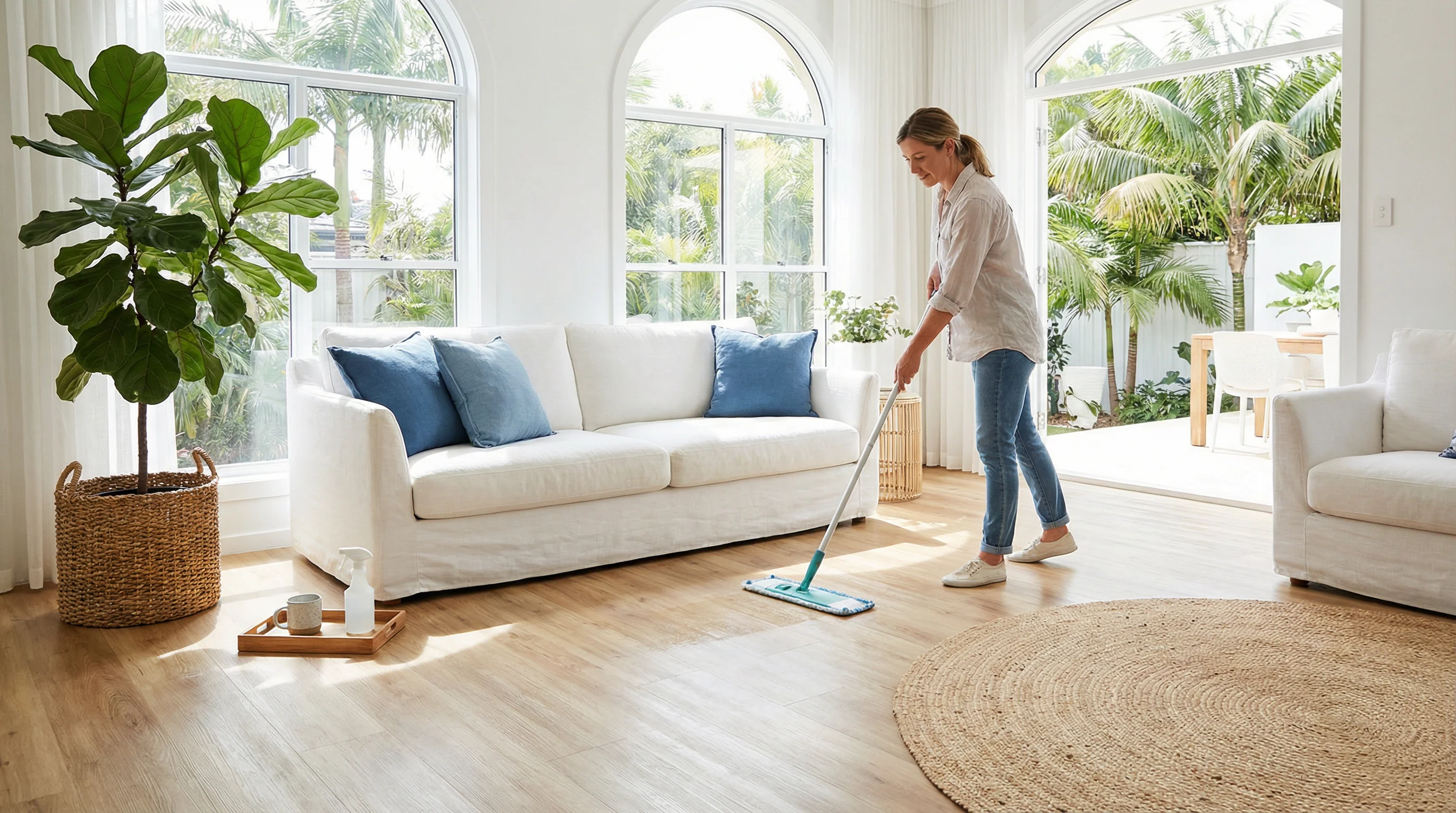
Weekly Deep Cleaning. At least twice a week, follow up your sweeping or vacuuming with damp mopping. Use a pH-neutral cleaner specifically designed for your flooring type—harsh chemicals can damage protective coatings and dull the finish. For vinyl and laminate floors, make sure your mop is only damp, not soaking wet. Excess water can seep into seams and cause warping or separation over time.
Choose the Right Tools. Invest in a quality microfiber mop and soft-bristled broom. Microfiber is gentle on floors while effectively capturing dust and dirt. Avoid abrasive scrubbers, steel wool, or stiff brushes that can scratch surfaces. For vacuuming, use the hard floor setting and ensure the beater bar is turned off to prevent scratching.
Tip 2: Control Humidity Levels Year-Round
Florida's humidity is legendary, and it's one of the biggest threats to your flooring. Even waterproof materials can be affected by extreme humidity fluctuations.
Understanding the Ideal Range. The sweet spot for indoor humidity is between forty and sixty percent. Below forty percent, some flooring materials can dry out and crack. Above sixty percent, you risk mold growth, adhesive failure, and expansion issues. In Florida, the challenge is usually keeping humidity from climbing too high, especially during our humid summer months.
Use Your HVAC System Strategically. Your air conditioning system does more than just cool your home—it's also your primary humidity control tool. Run your AC consistently rather than turning it on and off throughout the day. This maintains stable temperature and humidity levels, which is much better for your floors than dramatic fluctuations.
Consider a Dehumidifier. In particularly humid areas of your home, such as basements, bathrooms without exhaust fans, or rooms with poor air circulation, a standalone dehumidifier can make a significant difference. Modern dehumidifiers are energy-efficient and can automatically maintain your target humidity level.
Monitor with a Hygrometer. These inexpensive devices measure indoor humidity and temperature. Place one in your main living area and check it regularly. If you notice humidity consistently above sixty percent, take action to bring it down before your floors suffer damage.
Tip 3: Protect Your Floors from Florida's Intense Sunlight
The Florida sun is beautiful, but its UV rays can be brutal on flooring. Prolonged sun exposure causes fading, discoloration, and can even weaken some flooring materials over time.
Window Treatments are Essential. Install curtains, blinds, or shades on all windows, especially those facing south and west where sun exposure is most intense. You don't have to keep them closed all day—simply draw them during peak sunlight hours, typically between ten in the morning and four in the afternoon.
UV-Protective Window Film. For homeowners who prefer unobstructed views, UV-protective window film is an excellent solution. These transparent films block up to ninety-nine percent of harmful UV rays while still allowing natural light to enter your home. They also help reduce cooling costs by blocking heat, which is an added bonus in Florida.
Rotate Furniture and Area Rugs. If you have area rugs or furniture that blocks sunlight from reaching certain sections of your floor, rotate them periodically. This ensures that your flooring ages evenly and prevents obvious color differences between exposed and protected areas.
Choose UV-Resistant Flooring. When selecting new flooring, ask about UV resistance. Modern luxury vinyl plank and high-quality laminate often include UV-protective coatings that significantly reduce fading. Porcelain tile is naturally resistant to sun damage, making it an excellent choice for sun-drenched Florida rooms.
Tip 4: Implement a "No Shoes" Policy
This simple rule can dramatically extend the life of your floors and reduce maintenance time.
Why Shoes are Your Floor's Enemy. Outdoor shoes track in sand, dirt, small rocks, and chemicals from lawns and driveways. These abrasive particles act like sandpaper, gradually wearing down your floor's protective finish. Shoes also bring in moisture, oils, and contaminants that can stain or damage flooring materials.
Make it Easy for Everyone. Place attractive shoe racks or baskets near all entry doors. Keep a supply of comfortable house slippers for guests who feel uncomfortable going barefoot. Many Florida homeowners find that once they establish this habit, they actually prefer the comfort and cleanliness of a shoe-free home.
Strategic Use of Entry Mats. Place high-quality entry mats both outside and inside every exterior door. The outdoor mat scrapes off larger debris, while the indoor mat captures finer particles and absorbs moisture. Choose mats with rubber backing to prevent slipping, and clean or replace them regularly.
Special Considerations for Tile. While tile is incredibly durable, the grout between tiles is porous and can absorb dirt and stains. A no-shoes policy helps keep grout lines cleaner and reduces the frequency of deep cleaning or resealing needed.
Tip 5: Address Spills and Damage Immediately
In Florida's humid climate, quick action can prevent minor issues from becoming major problems.
The Five-Minute Rule. When spills happen—and they will—clean them up within five minutes. This applies to water, beverages, pet accidents, and any other liquids. Even waterproof flooring can be affected if liquids are allowed to sit for extended periods, especially if they seep into seams or edges.
Proper Spill Cleanup Technique. Blot spills with a clean, absorbent cloth rather than wiping, which can spread the liquid. For sticky substances, use a damp cloth with a small amount of appropriate cleaner. Dry the area thoroughly afterward to prevent water spots or residue.
Watch for Early Warning Signs. Regularly inspect your floors for signs of damage such as loose planks, cracked tiles, separating seams, or discoloration. Catching problems early allows for simple repairs before they spread. Pay special attention to areas near exterior doors, windows, and plumbing fixtures where moisture intrusion is most likely.
Know When to Call Professionals. Some issues require professional attention. If you notice widespread water damage, large cracks, significant warping, or mold growth, contact a flooring professional immediately. Attempting DIY repairs on serious damage often makes the problem worse and can void warranties.
Seasonal Maintenance: Florida's Unique Considerations
Florida's seasons may not involve snow and autumn leaves, but they do require seasonal flooring attention.
Hurricane Season Preparation. Before hurricane season (June through November), check all windows and doors for proper sealing. Inspect areas where water could potentially enter your home. If flooding is a concern in your area, know how to quickly move area rugs and furniture to minimize damage.
Summer Humidity Management. During our hottest, most humid months (July through September), be extra vigilant about humidity control. Run your air conditioning consistently, and watch for any signs of moisture-related issues like condensation on windows or musty odors.
Winter Dry Spells. Florida winters can occasionally bring drier air, especially when cold fronts move through. If indoor humidity drops below forty percent, consider using a humidifier to prevent floors from drying out excessively.
Professional Maintenance: When to Schedule It
While daily and weekly maintenance is something you can handle yourself, professional care is important for long-term floor health.
Annual Professional Cleaning. Schedule professional deep cleaning at least once a year, especially for tile and grout. Professionals have specialized equipment and cleaning solutions that remove embedded dirt and restore your floor's original appearance.
Periodic Inspections. Have a flooring professional inspect your floors every two to three years. They can identify potential problems before they become serious and recommend preventive measures. This is especially important for homes with older flooring or those in areas prone to moisture issues.
Refinishing and Resealing. Some flooring types benefit from periodic refinishing or resealing. Tile grout, for example, should be resealed every one to two years in Florida's humid climate to prevent staining and moisture penetration.
Protecting Your Investment for Years to Come
Your home's flooring is a significant investment that deserves proper care and attention. By following these five essential maintenance tips—establishing a consistent cleaning routine, controlling humidity, protecting against UV damage, implementing a no-shoes policy, and addressing problems immediately—you'll keep your floors looking beautiful and performing well for decades.
Remember that different flooring materials have specific care requirements, so always follow manufacturer recommendations for your particular floor type. When in doubt, consult with flooring professionals who understand Florida's unique climate challenges.
At FloorzUp Pro, we're not just here to install your floors—we're here to help you maintain them for the long term. If you have questions about caring for your existing floors or you're considering new flooring that's easier to maintain in Florida's climate, we're always happy to help.
Call us today at 352-512-4251 for expert advice, professional maintenance services, or to schedule a free consultation for new flooring. Your floors will thank you!
Get Flooring Tips & Exclusive Offers
Join our newsletter for expert flooring advice, design inspiration, and special discounts for The Villages homeowners.
We respect your privacy. Unsubscribe anytime.
Ready to Get Started?
Contact FloorzUp Pro today for a free in-home consultation. We serve The Villages, Oxford, and all of Sumter County.